In This Article
What Is a Ham Radio Technician License?
The Technician class license is the entry-level amateur radio license issued by the FCC in the United States. It is the first of three license classes (Technician, General, Extra) and gives you access to all amateur frequencies above 30 MHz, plus limited HF privileges.
The license is free from the FCC, does not expire for 10 years, and can be renewed indefinitely. There is no Morse code requirement — the FCC eliminated that in 2007. The only requirement is passing the 35-question written exam.
What You Can Do With a Technician License
A Technician license gives you access to:
- VHF/UHF communication (2m, 70cm bands): Local repeaters, emergency communication networks, weather services
- Satellite operation: Contact amateur satellites in orbit, including the International Space Station
- Digital modes: APRS (automatic position reporting), Winlink (email over radio), FT8 and other digital HF modes
- Limited HF privileges: CW (Morse code) on 80m, 40m, 15m, and 10m, plus voice on 10m (28.3-28.5 MHz)
- Emergency communications: Participation in ARES (Amateur Radio Emergency Service) and RACES (Radio Amateur Civil Emergency Service)
The Exam: Format, Questions, and What to Study
The Technician exam draws 35 questions randomly from a published pool of 426 questions. This is a significant advantage: because the pool is published, you can study the exact questions that might appear on your exam.
The pool is divided into 10 subelements:
- T1: FCC Rules and Station License
- T2: Operating Procedures
- T3: Radio Wave Characteristics
- T4: Amateur Radio Practices and Station Setup
- T5: Electrical Principles (Ohm's Law, basic electronics)
- T6: Electrical Components
- T7: Station Equipment
- T8: Modulation Modes, Digital Signals, Amateur Satellites
- T9: Antennas and Feed Lines
- T0: Electrical, Antenna, and RF Safety
You need 26 correct out of 35 (74%) to pass. The exam is free to study for since the complete question pool with correct answers is available at the ARRL website.
How Long Does It Take to Get Licensed?
Most people who study consistently are ready for the exam in 1-3 weeks. The published question pool means you can study the actual exam questions — not just concepts — which significantly compresses the timeline.
One effective approach: read through the study guide once to build context, then spend 3-5 days drilling the question pool using a free practice app like HamStudy.org or QRZ.com's practice exams. When you are consistently scoring 80%+ on practice exams, you are ready.
Finding a Test Session Near You
The exam is administered by Volunteer Examiner (VE) teams — licensed hams who are certified to give the exam. You do not go to a commercial testing center like Prometric or PSI.
Find a test session at:
- ARRL Exam Search: arrl.org/find-an-amateur-radio-license-exam-session
- HamStudy.org: hamstudy.org/sessions
- Local ham radio clubs: Most clubs hold exam sessions monthly
The exam fee is typically $15 (FCC charges a separate $35 processing fee, paid online after you pass). Bring a government-issued photo ID and your FCC Registration Number (FRN), which you create at the FCC CORES website before the exam.
What Radio to Buy After You Pass
For most new Technicians, a handheld VHF/UHF radio (HT — handheld transceiver) is the best first radio. Popular choices in the $30-150 range:
- Baofeng UV-5R: The most common beginner radio. Inexpensive, capable, and has a massive support community — though programming can be tricky without software.
- Yaesu FT-65R: More polished than the Baofeng, easier to program manually, good build quality for around $80.
- Radioddity GD-77: DMR-capable HT for those interested in digital modes from the start.
After your first HT, many Technicians upgrade to a mobile VHF/UHF radio for their car and eventually explore HF after upgrading to General class.
Getting Your First Contact on the Air
After you pass and your call sign appears in the FCC database (usually within 24-48 hours), you are legal to transmit. Your first steps:
- Find a local repeater using repeaterbook.com and program it into your HT
- Listen to the repeater to get a feel for local activity
- Call out with your call sign and see who responds — "This is [callsign], monitoring" is the standard way to make yourself known
- Join your local ham radio club — most clubs have weekly nets (organized check-in sessions) that are perfect for first contacts
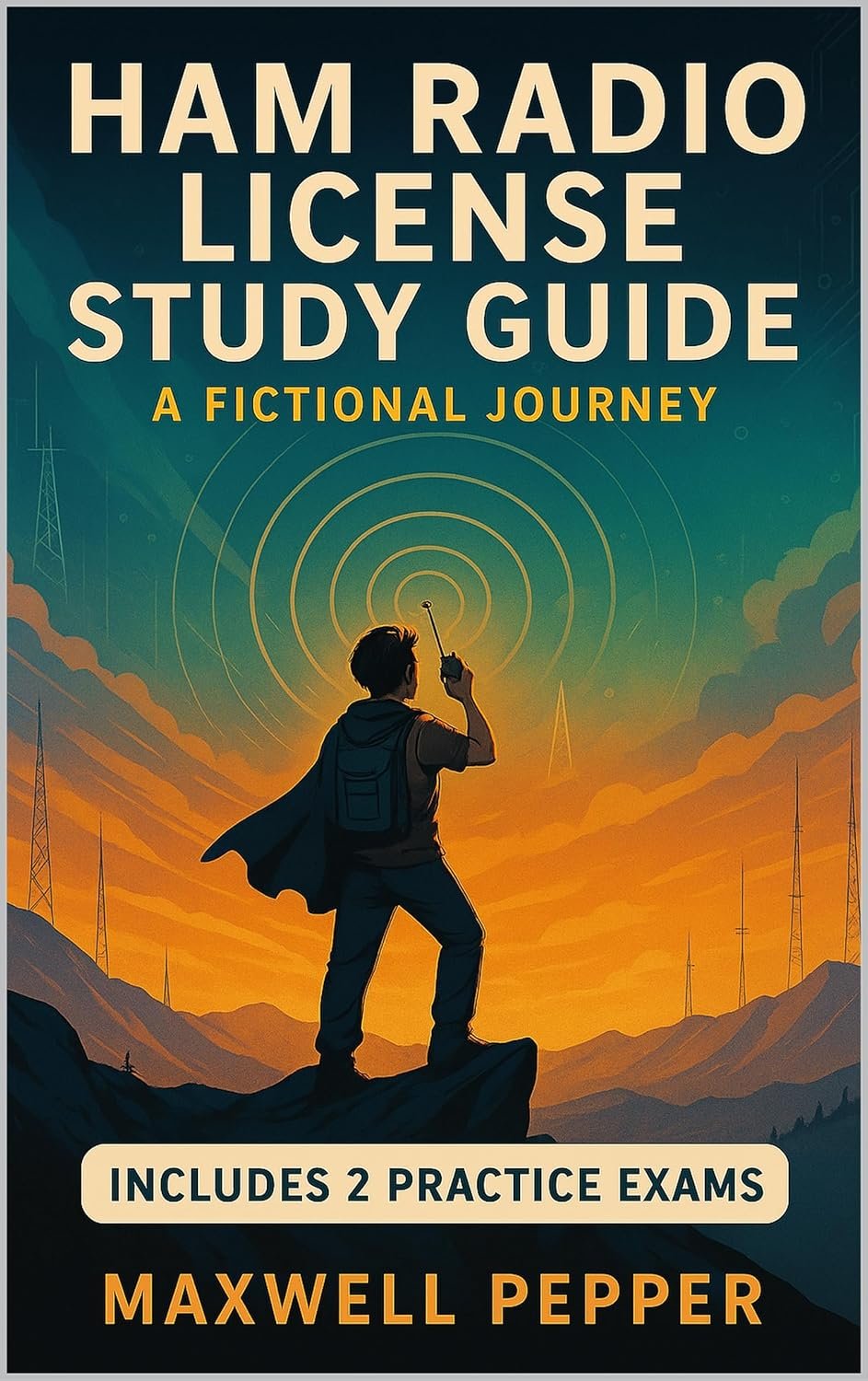
Ham Radio License Study Guide: A Fictional Journey
Maxwell Pepper's story-driven guide follows Hertzlet through the magical realm of Denmarkium — teaching the full Technician question pool through an adventure you will actually want to finish. 2 practice exams included.
Get It on Amazon ↗
Maxwell Pepper is a licensed Professional Engineer (PE), Project Management Professional (PMP), and MBA with 15+ years of experience in the energy industry. He lives in Houston, Texas.
Browse all Maxwell Pepper books →